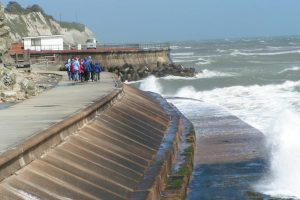
Flood Defense is more important than ever to the entire world. We must rev up our efforts to deal with both the rising sea levels and the increased precipitation resulting from climate change. The atmospheric rivers affecting coastlines can be devastating to shorelines and floodplanes, which should really be respected – if it floods once, it will probably flood again and rebuilding is not realistic, whereas relocating is the difficult but necessary solution. Buildings and all the propane and oil tanks, household and garage and business chemicals should be removed from the shorelines if the area is prone to the inevitable flooding that will drag it all into our oceans, lakes and rivers.
Our leaders need to take action to prevent floods and rising sea levels due to melting polar caps and the increasing threats of tsunamis due to underwater volcanoes and earth quakes. We can pay for it now or we can pay for the clean-up later which will be much worse on many levels. City planners and leaders of many cities are going to have to redesign and construct pathways for water to escape and increase green areas to absorb the moisture during times of increased precipitation and flooding.
It is high time we start to harness the water coming off the polar ice caps before it goes into the water and it is up to the world leaders to make this happen. We must spend the money now to gather this melting ice before the water does all the damage it will inevitably do, which will cost billions, in the end, to clean up.
As global warming continues to cause a rapid increase in rising sea levels, we ask, how many storms can take place before the oceans, rivers, and lakes become so polluted with debris and chemicals that they are a hazard to marine life and people alike?
With our all technology, we should be able to manage our waters better so that millions of people get the water they need, while others have too much.
Methods and aspects of flood and erosion defense:
Trees/Mangroves | Dams | Water-Gate | Self-closing flood barrier | Flood Closing Channel | Temporary perimeter barriers | Longshore Drift | Cliff Stabilization | Beach Replenishment | Gabions | Weirs | Diversion canals | Property level protection | River defenses | Coastal defenses |
We can do things on an individual and grassroots basis such as capturing water in rain barrels during high floods. It doesn’t sound like much, but if an entire neighbourhood community water, it would make a difference. We can also build diversion canals or at least a culvert. We can plant trees. UNEP: “… Forests also buffer the impacts of storms and floods.” For areas in tropical and subtropical climates, planting mangroves does wonders to anchor the shorelines and estuaries. These amazing plants not only provide a barrier to cyclones and storms, but they also can grow in water that is salt-rich and oxygen-poor water, while sequestering more CO2 than rainforests, clarifying water, protecting and providing a habitat for life above and below the water level, and help with desalinizing water. Speaking of which, we can embrace desalinization, as an answer to both the world’s freshwater shortages and the rising sea levels, as we pump seawater out of the ocean and redistribute it throughout the lands. Hydrating the land will help grow trees to ground the earth. Not only will the water be used for people, and agriculture, it can fill reservoirs to be used to fight the growing incidences of forest fires. Temporary perimeter barriers are now available in many flood prone areas such as the Netherlands, where much of the land is below sea level.
Redirect the water or move the people. It is high time to be realistic and move inland for many around the world.
We need to start breaking down the borders of the world and share the land. As more and more land becomes locked in a pattern of flooding, it will have to be abandoned. Countries around the world need to absorb the displaced people on a larger scale or help them adapt their areas to rising sea levels.